It's easy being Green - 7 ways to use technology

With consumer awareness of environmental issues at an all-time high, there is an increasing expectation businesses embrace sustainability principles. To do so will typically make financial sense. Stephen Withers explores eight easily-implementable ways to cut your corporate carbon footprint...

With IT being responsible for around two percent of global CO2 emissions – about the same as the airlines – it’s time to see what it can contribute to the task of cleaning things up.

According to Alison O’Flynn, principal consultant and lead of the national sustainability practice at Fujitsu Consulting, IT can contribute to an organisation’s sustainability objectives and be seen as part of the solution.

Part of this may involve CIOs being given a KPI for the company’s green strategy, which can help achieve targets as IT is often the second biggest user of power within a business, she says.

Energy efficient technologies
A good starting point is an assessment of the current IT situation, according to O’Flynn. This establishes the baseline power usage, and should consider the hardware used in offices as well as data centres.

Various strategies can then be applied, including server consolidation (replacing a large number of computers with a smaller number of more powerful but more energy-efficient units), virtualisation (which can improve server utilisation, and - in conjunction with thin client technology - possibly move some desktop processing to the server), and replacing conventional desktop PCs with notebooks (which can reduce power consumption by 75 percent or more).

Another approach O’Flynn says is worth considering is to review the company’s printer fleet. Rationalisation, including optimising the number of devices for the number of staff at a given location and adopting multi-function devices, can reduce energy and other running costs, and therefore emissions.

Other types of new hardware can also deliver greater energy efficiency.

For example, Craig Dobson, HP’s consolidation and virtualisation business development manager for South Pacific says HP’s blade server enclosures include advanced power management features to minimise energy consumption according to the load, and even shut down hardware that’s not actively being used. Combining this with VMware’s ability to redistribute virtual machines means physical servers can be turned off when they are not actually needed, providing useful energy savings.

Similarly, IBM’s BladeCenter chassis can hold up to 14 blades and associated switches, says Peter Hedges, IBM sales executive for System x and BladeCenter for Australia and New Zealand, and are designed to be 30 to 40 percent more power efficient than individual 1U rack-mounted servers.

In a real-life example, Sustainability Victoria reports reducing the power consumed by its servers by 68 percent by replacing conventional hardware with a BladeCenter and running more than one application on a server.

The planned introduction of carbon trading in 2010 means organisations need to start thinking about these issues, as much IT gear is acquired on a three or four year cycle. Carbon trading will therefore arrive during the working life of equipment that is selected today.

Document management is “not something I would initially have thought as having an environmental impact,” says Andrew McKenzie, manager of information worker solutions at Professional Advantage, but customer experience shows it can deliver benefits such as a significant reduction in paper use.

It also leads to reductions in the amount of storage required, as there are fewer copies of any given document in existence. Companies are getting “some good wins” from this, he says. Even small companies can benefit: McKenzie says one client has been able to avoid printing 300 copies of reports every two or four weeks by adopting Microsoft’s SharePoint server for document management. Another client is using a similar approach to deliver training and orientation materials, reducing the use of paper, travel, couriers and so on, all of which help improve emissions.

Videoconferencing
Encouraging the use of videoconferencing is an easy win, according to O’Flynn. Reducing unnecessary travel cuts costs, improves productivity and cuts emissions.

Andrew Pillon, area manager at Tandberg, agrees: “the [videoconferencing] technology we have is a replacement for traditional forms of travel.”

“A lot of organisations are starting to open up to opportunities that can improve productivity and decrease attrition, he says. Skills shortages mean attracting and retaining staff is especially important. Providing better communications at work (integration with unified communications products such as Microsoft Office Communicator or IBM’s SameTime makes it as easy to start a videoconference as it is to make a phone call or send an instant message) and reducing the need for frequent travel helps attract and retain members of Generations X and Y, who are also concerned with the environmental considerations. It also helps improve an organisation’s corporate social responsibility score,” says Pillon.

But organisations also need to foster a culture of using videoconferencing, for example by demonstrating senior management support and by actively discouraging interstate travel for brief meetings.

James Swift, COO at Leigh Mardon says that acting on advice from Pitcher Partners, “we are investing in video conferencing facilities where we hope to reduce our travel costs by approx $5,000 per month, which indirectly saves on green house gas emissions from reduced travel.”

Tandberg’s customers have enthusiastically adopted high-definition video, with around 90 percent of terminals sold being HD units. Delivering 30 frames per second at 720p or 1080p quickly overcomes any past disappointment with yesterday’s jerky, low-resolution equipment. “It’s seriously like being in the same room,” Pillon says.

A better experience means people are more likely to use videoconferencing, shortening the payback period.

While videoconferencing is associated with boardroom-style systems, Pillon says there is a trend to desktop systems. “Simplicity is the key,” he says, and room-based systems tend to be seen as the domain of senior managers.

“The future [of videoconferencing]... is on the desktop,” says Pillon, though he believes room-based systems are still important, especially where several participants are at the same location.

Web Conferencing
Web conferencing technology has developed rapidly in recent years, meaning the environmental and cost advantages of reducing travel can be extended to staff and business partners who may not have access to videoconferencing equipment.

“By providing a simple, easy-to-use product that allows people to communicate effectively online, we are reducing the effects of two of the biggest environmental pollutants, planes and cars,” says Todd Lewis, Asia Pacific marketing manager for online communications specialist Citrix.

Today’s web conferencing solutions allow multiple attendees to participate and can be used to share documents, for training or product demonstrations. Web based seminars are a powerful way to deliver a message to a large number of people at once, with the capacity to accommodate up to one thousand simultaneous viewers.

Embedded features such as polling and exit surveys gather valuable data to determine the effectiveness of the event. These tools utilise technology that most people have as standard, computers and internet connections. Some solutions even span the digital divide between the PC and the Mac, increasing the number of potential participants.

Fleet Management
Using IT to track your vehicle fleet can deliver cost and energy savings, according to Leo Verstegen, general manager indirect channels at MinorPlanet. The company’s VMIgreenlight GPS-based vehicle management software for transport and services companies helps increase efficiency and meet regulatory requirements in several ways.

Examples include discouraging speeding and harsh braking and acceleration, recording idle time with the engine running (eg, while a truck is waiting to be unloaded at a supermarket), and improving load planning.

Vehicle tracking also encourages drivers to use the most efficient routes, and is an effective way of stopping them from carrying out ‘foreign’ jobs at the company’s expense.

Verstegen says “there’s a lot more focus starting to come onto fuel-burning carbon emissions,” but not everyone understands the financial benefits that can be gained from that attention.

Furthermore, major companies are starting to require their transport providers to measure carbon emissions, as they want to be seen to be addressing indirect as well as direct emissions.

But transport companies work on such small margins that it isn’t enough to be seen as good corporate citizens. They need to understand that attention to such matters can lower costs, help retain existing customers, and attract new business.

Traditionally, IT has been “a grudge purchase” for transport operators, Verstegen says, but the market is maturing and companies are beginning to realise what technology can do for them.

Data centre optimisation
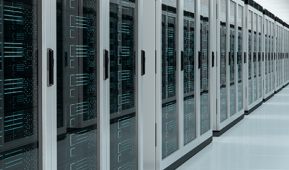
Two key techniques are server consolidation and virtualisation. Consolidation is the replacement of several servers with a smaller number of more powerful units; virtualisation (discussed in more detail below) ‘slices up’ servers into smaller units for greater manageability.

Expert opinion varies, but it seems consolidation typically reduces the number of servers needed by a factor somewhere between 4:1 and 12:1. When accompanied by virtualisation, energy usage can be reduced by up to 40 percent, says Mark Toner, HP’s data centre manager for South Pacific.

O’Flynn notes a knock-on effect in that using less power means less heat, so less electricity is needed to run the cooling system. However, consolidation frees up space in the data centre, which is likely to be filled with more equipment, increasing the cooling load again.

Relatively cheap and simple techniques for reducing cooling costs and associated emissions include arranging equipment into properly isolated hot and cold aisles, increasing the height of the false floor or at least clearing any obstructions in the void to improve airflow, and ensuring that all empty rack spaces are fitted with blanking plates to maximise the airflow across the equipment and reduce the overall load on the air conditioning.

Another simple trick is to avoid overcooling the data centre: Sustainability Victoria reports “significant power savings” from allowing the temperature of its server room to rise by 5 degrees C while keeping equipment within recommended operating temperatures.

Dobson says dynamic smart cooling can reduce overall cooling costs and reult in a consequent reduction in emissions.

This approach uses sensors to determine the intake and exhaust temperatures of each rack, and that information is used to direct cold air where it is most needed.

HP has used this approach on its own systems to reduce the energy needed for cooling by between 20 and 40 percent, according to Toner.

IBM’s rear door heat exchangers use chilled liquid to cool the hot air emerging from racks. This is between 75 to 95 percent more energy efficient than conventional air cooling, says Hedges.

An early step in optimisation is to measure exactly how much power each device is using in order to decide which ones are candidates for removal or replacement, says Toner.

Software such as HP Insight Manager can be useful, as it helps monitor IT-related power consumption across the organisation.

Furthermore, IBM’s Active Energy Manager can monitor and control the power consumption of servers.

For example, a particular rack may only have 10kW of power available, even though the total consumption of all the equipment installed is 11kW.

Active Energy Manager will take steps such as reducing CPU speeds, giving priority to certain systems, and if necessary prevent some devices from powering up.

Virtualisation
The basic idea of virtualisation is that multiple copies of an operating system are ‘tricked’ into thinking they are running on real hardware, when in fact an additional software layer is used to enable multiple virtual machines to coexist on one physical computer.

Organisations tend to over-specify servers to ensure scalability and longevity, says McKenzie, so it is not unusual for a server to run at around five percent utilisation.

A virtualisation strategy means multiple virtual servers can run on one physical server for greater efficiency. When a particular virtual server needs more power than is available on that physical server, it is relatively easy to move it to a different one. For example, a mail server is likely to need more resources during business hours than it does overnight.

It is possible - though less common, McKenzie says - to rearrange the distribution of virtual servers during quiet periods so that some of the physical servers can be switched off completely to save power. This is mainly the province of large organisations, he says.

The exact power saving delivered by virtualisation and consolidation is very hard to estimate, says Hedges, as it is “very dependent on the work being done.”

While the initial motivation for virtualisation was to gain capital or operational cost efficiencies, the ability to respond more quickly to business needs and to help overcome space, power or cooling limitations in the data centre have become more important, says Dobson.

However, changes in the economy may lead to more attention being given to costs over the next 12 months.

Despite the interest in virtualisation, very few organisations have actually adopted it as part of their enterprise architecture, he says. Most use at this stage is to meet specific needs.

Thin client computing
Attention is returning to the use of thin clients in place of PCs, with the processing being done on servers in the data centre.

Total electricity consumption can be reduced by 40 to 50 percent according to Dobson, while McKenzie suggests the thin clients themselves may only need to be replaced every five years or so, compared with the typical three-year cycle for PC refresh.

Any additional processing power that is subsequently needed can be delivered more cheaply from the data centre than by using desktop hardware.

Advantages include savings on infrastructure, applications and licensing, and better control over optimisation and utilisation. There are also benefits for organisations that want to give their employees the flexibility to work at multiple locations including their homes and perhaps even clients’ premises.

Desktop virtualisation is “definitely a growth market” with “a huge opportunity to drive [energy] efficiency” says Dobson. Endpoint sales doubled between 2006 and 2007, and have been showing double-digit growth for the last five quarters. The number of commercial and government tenders calling for the technology is still increasing, a trend that he expects to continue at least to 2010.

Hedges agrees, saying “the next focus will be on client consolidation.” Server consolidation work will be bedded down over the next 12 to 18 months, and midsize and larger companies will turn their attention to the desktop. As many as 90 to 95 percent of corporate PCs could be virtualised with no loss of functionality, he says.

Leigh Mardon “will be assessing a thin client architecture in Australia, similar to our operation in NZ, and we expect to make significant hardware and electricity savings by doing this,” says Swift.

Thanks to modern networks, desktop virtualisation can provide users with the same experience that they get with conventional hardware. Indeed, a thin client can provide better performance than an older PC that it replaces.

A key to the process is the use of dedicated chips to handle compression and encryption of the data flowing between the data centre and thin clients. A small percentage of users will require a dedicated blade in the server, but most users will be happy with a virtual machine that shares a blade with other users.

Even demanding users such as architects may find they get better performance. Hedges explains that the time needed to transfer massive files between a file server and the PC can be a real bottleneck, and one that’s largely avoided with a thin client arrangement as the storage and the processor are located in the same place and connected by extremely high speed links.

But thin clients aren’t for everyone. McKenzie says they are best suited for organisations with at least 100 staff, as much of the overall benefit comes from simplified management due to the centralisation of processing.

Carbon footprint measurement
Stefan Goehring, head of the office of CFO solutions at SAP Australia, says it’s not enough to approach carbon footprint measurement as a compliance issue – organisations should aim to get more from their efforts than that.

Examples include financial advantages (not just in terms of cost reduction, but also by encouraging investment by ‘green funds’), attracting and retaining the best talent, and by building corporate reputation and brand value.

SAP Environment Compliance helps with the process by drawing relevant data from a variety of sources (including SAP and other vendors’ ERP systems, as well as automated data collection systems such as smart meters and monitoring devices on chimneys).

Compliance “must be part of a business process” if it is to be consistent, auditable and transparent, Goehring says.

SAP Environment Compliance can be set up to reflect an organisation’s structure and activities, including escalation paths when things go wrong. In addition to emissions reporting, it also provides dashboards so managers can see the current status and check for any exceptions that may have arisen.

Once in place, the software can deliver the information needed to identify the emissions-heavy processes, and help work out what is needed to improve performance in this area.

Furthermore, it will help provide the information needed to decide whether it would be better to buy carbon credits (once the trading scheme comes into existence) or to reduce emissions.

But you might not want or need to go that far at this stage. Ndevr CEO, Maureen Clifford says her company’s NGER (Ndevr Greenhouse Emission Reporting) can capture emissions information from invoices for electricity, gas, diesel fuel, and so on.

The software – currently available for JD Edwards EnterpriseOne and as a ‘black box’ version that integrates with other ERP systems via Web Services, with an Oracle E-Business implementation under development - ensures the required details are captured during data entry.

If a vendor is known to provide the emissions factor, it becomes a mandatory field, ensuring that the records are complete and accurate. Multiplying usage by the factor gives the amount of emissions associated with that fuel source.

Records kept for this purpose must be auditable, but the government accepts invoice details for this purpose. The invoice basis is auditable, secure and comparable with other companies and industries, says Clifford.

While Ndevr’s software makes provision for data input from smart meters and electronic or scanned invoices, customers are showing little interest in this capability.

NGER caters for reporting at the level of individual facilities, companies or groups.

An estimated 700 companies - largely in the construction, engineering and manufacturing industries - will be required to comply with the legislation this year, but as the emissions threshold reduces over time more and more will be dragged into the net.

Clifford says that as the data capture requirement came in on July 1, “companies are definitely looking at what sort of system they need” to comply.

8/8/21_ex_m_nl_h

Further Reading

site by doubleclique